
Stick the Landing
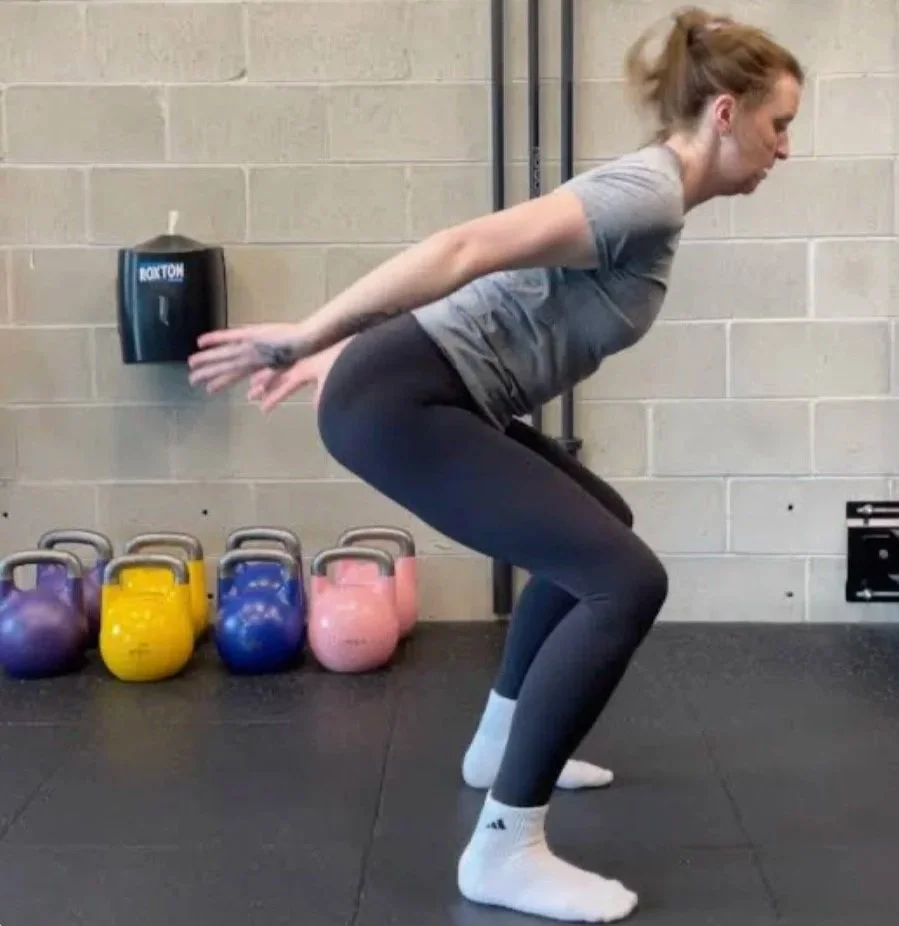
If you've been working on jumping drills—big or small—you want to make sure you get the landing right.
Jumping and bounding are getting a lot of attention for their ability to help build bone density. But when you hear that bounding is good for your bones, you might assume you're supposed to land hard with a slamming or jarring sensation. That's not the case. In fact, you're aiming for the opposite.
In most sports, dance, athletics, physical training, and physical therapy, a quality jump involves a controlled, quiet landing. In some plyometric drills, you'll hear people talk about "stiff" landings. This still doesn't mean crashing into the ground. Quite frankly, I think that's a misleading cue. The goal is really to minimize the time you spend on the ground so you can spring back up more quickly—not to slam into the floor. I can't think of an instance in life or sport where the objective is to hit the ground hard. Soft, controlled landings protect your joints while still creating the forces needed to stimulate bone.
So when you're practicing jump drills, think like a ninja. Land quietly and with control. You're practicing a controlled fall.
In fact, we control falls all day long. Walking is essentially a series of controlled falls from one foot to the other. Going down stairs requires us to slow our descent with control. We do this through eccentric muscle contractions—our muscles are working while they lengthen. It's a skill worth practicing because we use it every day.
You also don't have to start with jumps. You can practice controlled landings with a dynamic side lunge or a forward lunge. As your foot reaches for the floor, don't let it slam down. Land softly and control the descent. You're practicing deceleration—a skill that helps in both exercise and everyday life.
If jumping isn't the right place for you to start—and for many people it isn't—you can begin with heel bounces or heel drops. Keep your toes and the balls of your feet on the ground and lift your heels off the floor, then drop the heels to the ground (you can play with how much impact). Build to a movement that creates a quick impact, but is not painful. You should feel the shock reverberate through your body, not jar your joints. Your body should stay fairly rigid so the impact travels through your skeleton.
The current research does not show that heel drops alone increase bone density, although it also doesn't prove they can't. There is some evidence they may help maintain bone density, particularly in postmenopausal women. Even if they don't produce the same bone-building effect as jumping, they're a reasonable place to start and a good stepping stone toward higher-impact exercises.

So pick the level that's right for you and get bouncing. We can all work on our best impressions of Tigger from Winnie-the-Pooh!