Spinal Flexion
Is Spinal Flexion Safe if You Have Osteopenia or Osteoporosis?
If you've been diagnosed with osteopenia or osteoporosis, you've probably heard that you should stop flexing your spine. Flexion means rounding forward. You may have also heard that you should avoid twisting.
I'm going to walk you through the research behind those recommendations so you can better understand where they came from and have a more informed conversation with your doctor. Ultimately, the right decision depends on your individual situation.
Why I Think a Blanket "No Flexion" Rule Is Problematic
In my opinion, telling everyone with osteopenia or osteoporosis to stop flexing their spine creates a problem: life requires spinal flexion and if you don’t practice it you’ll get weaker at doing it and increase your risk of a variety of injuries.
Try putting on socks, shoes, or pants without rounding forward.
Try picking up a pen or a laundry basket from the floor. Unless you have a perfect deep squat every time, you'll likely round your back to some degree. Getting in and out of many cars involves a combination of flexion and rotation.
If we stop practicing these movements—or become afraid of them—we may become weaker and less coordinated at doing something we still need every day. Then, when life inevitably requires us to bend forward, we may be less prepared to do it safely. If our muscles aren’t strong enough to do a particular move, they will put more strain on the bones when we have to do it.
Rather than avoiding a particular movement altogether, I believe we should be asking how we can maintain these skills safely.
Why Do People Think Flexion Is Dangerous?
Most of the caution around spinal flexion comes from just a handful of studies.
The three studies most often cited include:
A 1984 study of 59 women with osteoporosis. Only 9 participants were assigned to a flexion-only exercise group, while 19 performed a combination of flexion and extension exercises.
A 2013 case series describing 3 people with low bone density who developed vertebral compression fractures after performing advanced yoga poses.
A 2018 case series of 9 people with vertebral compression fractures associated with yoga practice.
Those yoga case reports involved very demanding positions, including poses similar to lying on your back and rolling over until your feet touched the floor behind your head. That represents an extreme amount of spinal flexion that most people never need in daily life. As far as I know there is no study that has shown a basic crunch or reaching for your toes will fracture your spine.
Also, a three person study is so small it’s hard to take findings as concrete evidence of anything.
Is the Thinking Beginning to Change?
I believe it is.
More recent expert consensus statements have shifted away from saying "never flex your spine" and toward individualizing recommendations based on fracture risk and medical history.
Current guidance generally continues to recommend caution with:
End-range spinal flexion
Repetitive flexion under significant load
Combining spinal flexion and rotation, particularly under load
Fast or forceful flexion movements
At the same time, some organizations now acknowledge that controlled, mid-range spinal movement is appropriate for many people.
Questions to Consider
Everyone's situation is different. Some important questions include:
Have you had a fragility fracture or spinal compression fracture?
If yes, you'll likely need more caution and should discuss exercise modifications with your healthcare team.
Have you been doing these movements safely for years?
If so, that may influence what is appropriate for you. Exercise is rarely all-or-nothing. Continuing modified versions of familiar movements may be reasonable.
Are you newly diagnosed and just beginning exercise?
If yes, build gradually. Don't start with advanced spinal flexion exercises if your body isn't accustomed to them.
What About Pilates?
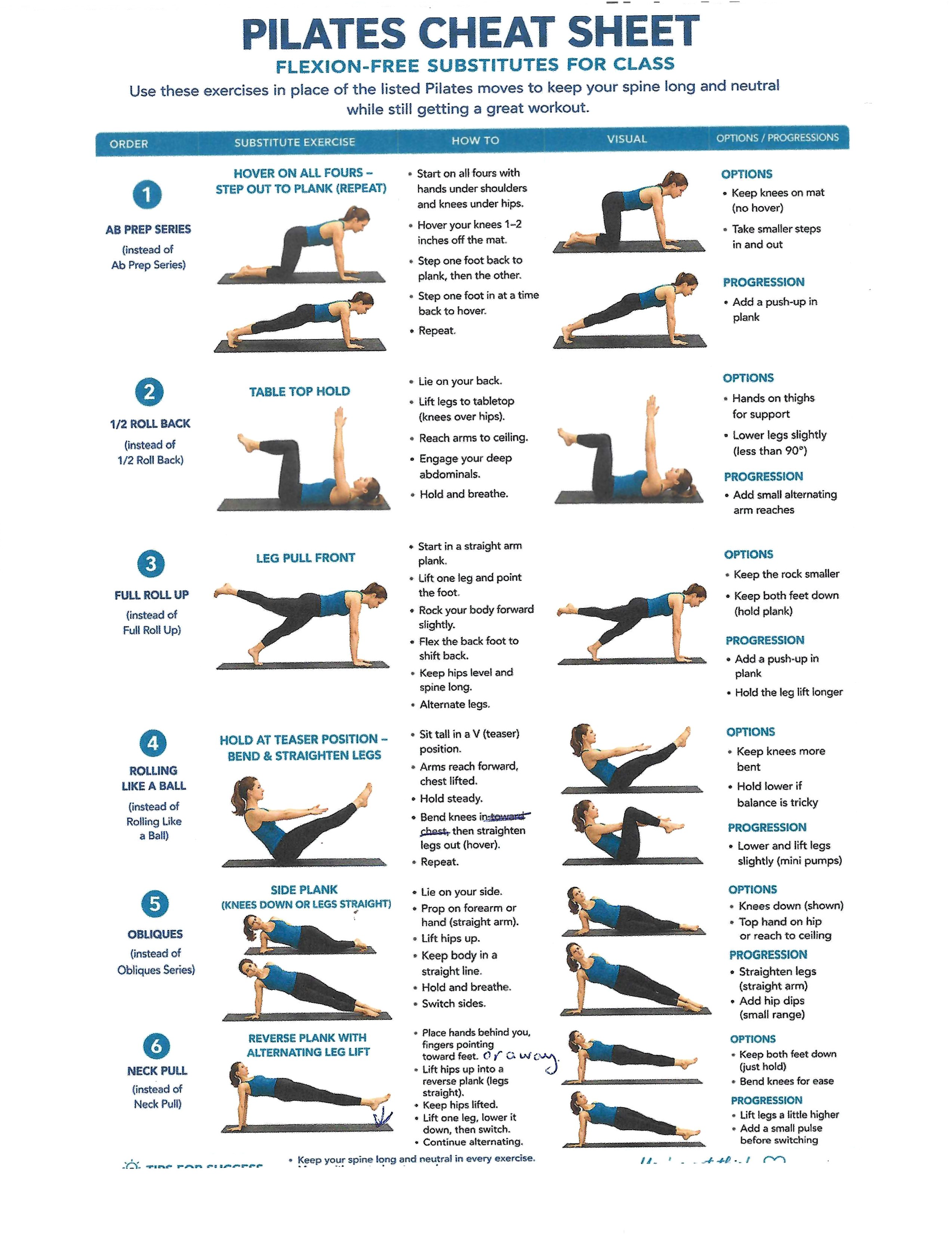
Traditional Pilates includes many exercises involving spinal flexion. At the same time, Pilates is also known for improving strength, balance, posture, body awareness, and functional movement—all things that are valuable for people with low bone density.
The research does not clearly tell us which specific Pilates exercises are safe or unsafe.
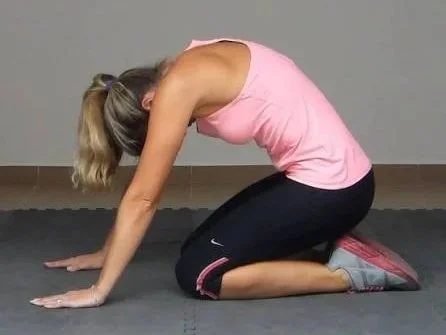
Gentler movements, such as Cat Stretch, pelvic tilts, and controlled spinal mobility exercises, are generally viewed as lower risk. Some clinicians would also consider a controlled Half Roll Back reasonable for certain individuals, although this has not been specifically studied.
On the other hand, advanced exercises involving extreme spinal flexion—such as the Full Roll Over or Rolling Like A Ball—or repetitive flexion combined with momentum are still approached more cautiously. But in fairness, not necessarily because there is sound research saying they are bad.
What About Twisting?
Twisting is a little different.
Twisting combined with spinal flexion—especially under load—places greater stress on the spine than twisting alone and remains an area where most experts recommend caution.
That doesn't mean you never twist. We twist every day—looking over our shoulder while driving, reaching behind us, or turning to grab something.
Good technique matters.
Whenever possible, think about twisting through a long, tall spine rather than collapsing or rounding as you rotate. Slow, controlled movement is generally preferable to forceful or jerky twisting. The side lying Pilates exercise Spinal Rotation would likely be safe for most people. Getting your hips higher than you knees in a seated position will help you elongate and twist from a safer start position.
Strength Training & Jumping
We do know multiple studies (sometimes still small, but many larger than any I’ve cited here already) show lifting, including lifting heavy appears to be safe for postmenopausal women diagnosed with osteoporosis or osteopenia. Strength training has been shown to increase bone density.
Jumping and bounding has been shown to increase bone density, but most of those studies are on younger, healthy participants.
What Would I Do?
If I were diagnosed with osteopenia or osteoporosis today, I would not immediately eliminate every exercise involving spinal flexion.
I've spent years building strength, control, and body awareness. I would continue to monitor my bone health, discuss my exercise program with my physician, and modify movements if my situation changed.
That doesn't mean my approach is right for everyone—but I also don't believe the evidence supports a blanket recommendation that everyone with osteopenia or osteoporosis should stop flexing their spine altogether.
To me, it's similar to telling someone with knee pain to never squat or lunge again. Those movements are part of everyday life—getting out of a chair, climbing stairs, or getting off the toilet.
The goal isn't to eliminate essential human movement.
The goal is to learn to move well, build strength gradually, and choose the version of each movement that's appropriate for your body.
I hope this information is helpful. A diagnosis of osteopenia or osteoporosis often comes with a fear of moving and anxiety about disease progression. Movement is vital for maintaining bone density, so we don’t want to fear it. Finding the right exercises for you can provide a sense of control. Movement which focuses on breath and muscle control can help relieve stress. There is a link between our adrenals, brain, and our core muscles. Activating our core appears to reduce stress. Let’s just do it safely.
Please note: always speak with your doctor about any exercise plan after being diagnosed with any new conditions.