
A Different Way to Measure Progress
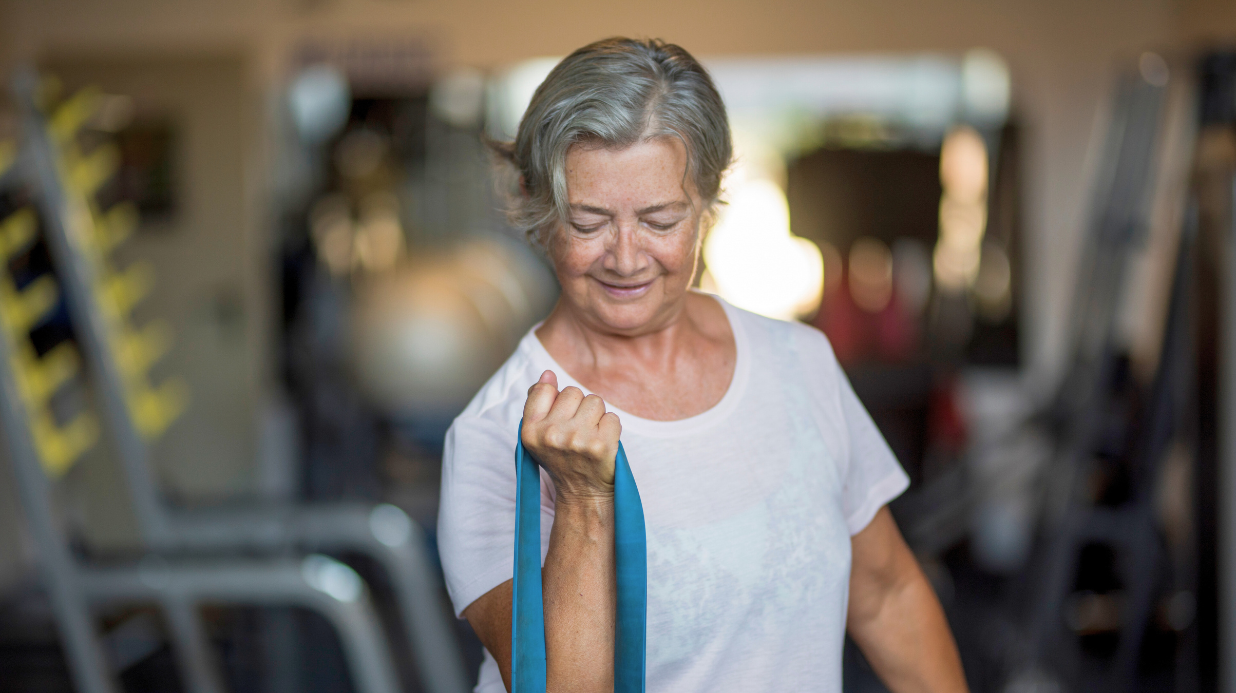
As we get older, we naturally lose muscle if we don't do anything to counteract it. Decades ago, it was believed that older adults couldn't gain muscle faster than they lost it. But since at least the 1990s, study after study has shown that simply isn't true.
Even frail adults in their 90s living in nursing homes have been shown to improve their strength, walking speed, and muscle mass through resistance training. Some were even able to get rid of their canes. That's incredibly good news.
That doesn't mean aging doesn't matter. Building muscle takes longer than it did when we were 20, and we're working against the natural tendency to lose muscle over time. That's exactly why strength training becomes even more important as we age.
To make gains, we have to challenge ourselves. We don't need to be sore for days after every workout, but it should require effort. If an exercise has become effortless, it may be time to add a little weight, increase the repetitions, or make the movement more challenging. Our bodies need a reason to adapt. So your workouts have to progress with you.
Lately, I've had a similar conversation with several people. They're noticing they're not as strong, flexible, or balanced as they once were. They're exercising consistently but don't feel like they're making progress.
Sometimes we need to shift our perspective.
Yes, we can improve our strength, balance, and flexibility at any age. But sometimes success isn't measured by how much we've gained—it's measured by how much we've preserved.
If you maintain the strength, balance, and flexibility you have today over the next five years, that's not failure. That's a victory.
If you stop exercising because you don't think you're improving, you'll almost certainly lose those abilities much faster. And regaining them later is usually much harder than maintaining them now.
It's also important to remember that progress is often slower than we'd like. Sometimes the improvements are happening, but they're subtle enough that we don't notice them ourselves.
Balance is a great example. Clients often tell me they don't think they're improving with balance exercises. Yet I can see that they are. What my clients feel is always more important than what I see but we need to understand the gap here. Balance doesn't mean you never wobble—it means you can control the wobble instead of letting it control you.
Years ago, I taught a Pilates class that had been meeting for about a year. One day the group commented that they didn't feel like they were getting stronger. By chance, I still had the lesson plan from their very first class. The next week, without telling them, I taught that original workout.
The first time they had done it, it filled the entire hour. A year later, they finished it in about 20 minutes and were ready for much more. They had become so accustomed to their progress that they didn't recognize how far they'd come.
Flexibility may be the toughest category of all. Strength gains can often come from training two or three times a week, but improving flexibility usually requires stretching most days of the week. That's a commitment very few people are willing to make, and I understand why—stretching isn't always the most exciting part of a workout.
Instead, we can look for ways to weave flexibility into what we're already doing. Warm up before you exercise. Cool down afterward. Include strength exercises that take muscles through a full range of motion so you're becoming both long and strong.
The point is that we have options. We can't stop the aging process—not yet, anyway—but we can influence how we age. We can give our bodies the stimulus they need to stay stronger, steadier, and more resilient.
It's a delicate balance. We don't want to convince ourselves that we're too old to improve or become afraid of movement. At the same time, we can't expect our bodies to respond exactly as they did decades ago.
Keep showing up. Challenge yourself. Celebrate the improvements when they come—but never underestimate the value of simply holding on to the strength, balance, and mobility you've worked so hard to build. Sometimes maintaining your abilities is one of the greatest accomplishments of all.