
Functional Strength Training
There is a woman I follow on social media who emphasizes strength training and what to eat to optimize muscle growth. Recently, in one of her videos, she suggested people should do 30 minutes of traditional strength training a couple of times a week rather than waste time on “froo-froo” exercises. She was referring to less traditional, more functional strength training programs.
She recommended multiple sets of biceps curls, lunges, squats, shoulder bridges, and a few abdominal exercises while dismissing more complicated functional movements.
On the surface, I agree with her—if your only goal is to strengthen your major muscle groups. But most of us need more from exercise. We need strength that helps us navigate everyday life.
Traditional strength exercises are great, especially if you're short on time or find yourself in a hotel gym wondering what to do. They're generally simpler, easier to learn, and effective at building strength. All good things.
The trouble is that many traditional exercises don't resemble the movements our bodies perform in everyday life. We get stronger, but that doesn't necessarily mean we're better prepared for every physical challenge life throws at us.
Consider a traditional biceps curl. I'm not knocking the exercise, but how often do you lift something in exactly that way?
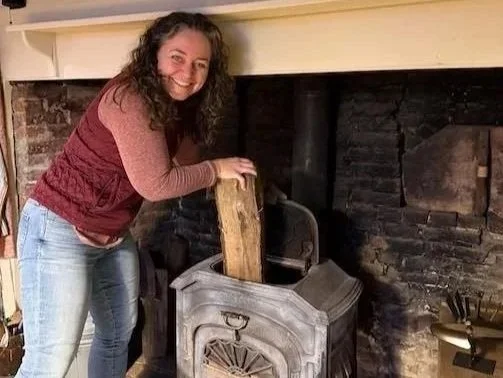
It's fall, and I'm about to start lugging wood into the house for our woodstove. I use my biceps, but often with my arms extended in front of me. Picking up logs and putting them into a wheelbarrow requires a combination of lunging, twisting, reaching, and lifting. That's a lot happening at once!
Think about the movements you regularly perform. Reaching for something on a high shelf might require arm strength, calf strength as you rise onto your toes, and balance to keep you steady.
Imagine a young child running toward you and jumping into your arms. You need strength to catch them, but you also need coordination, balance, and the ability to respond to their momentum.
Consider how you reach while gardening on all fours or maneuver your body to pick up a laundry basket.
These activities require multiple muscle groups to work together, often in awkward positions or unexpected ways. Functional strength training can help prepare us for those demands.
More complex movements can also challenge our stabilizing muscles, balance, and coordination. These are important components of maintaining physical function as we age.
Plus, the body benefits from variety. If we repeat the same traditional workout indefinitely without changing the challenge, progress may eventually plateau. We also miss opportunities to practice the many different ways our bodies are capable of moving.
I'm not dismissing traditional strength training. It has tremendous value and may be a more efficient way to build maximal strength or muscle mass. When we add balance, coordination, or more complex movement patterns to an exercise, we often need to reduce the weight we're lifting.
Research comparing traditional and functional strength training has produced mixed results. Some studies suggest both approaches produce similar strength gains, while functional training may offer additional benefits for balance, coordination, and everyday movement. Other studies find that traditional training improves these abilities, too, with little difference between approaches.
The research also reminds us that how we train matters. Progressive resistance is important for building strength, while improving balance, agility, and movement skills requires practicing those abilities.
For beginners, traditional strength exercises can be a great starting point. They allow us to learn foundational movements and build strength before adding complexity.
But why stop there?
We don't have to choose between traditional and functional strength training. They complement each other. Traditional exercises help us build strength, while functional exercises give us opportunities to apply that strength in varied, sometimes unpredictable ways.
The goal isn't just to be stronger in the gym. It's to be stronger and more capable in life.